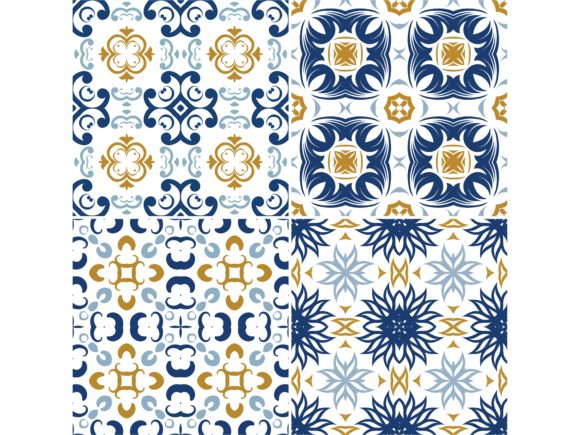
Vintage Tile Block: A Strategic Asset for Creative and Commercial Projects
When you encounter a design resource that claims to be a complete collection for all your creative projects, the natural instinct is to pause and evaluate. Vintage Tile Block is one such offering, and The Vintage Tile Retro collection positions itself squarely at the intersection of nostalgia and utility. For professionals across marketing, branding, education, and small business operations, understanding whether a resource like this genuinely supports your goals—or simply adds to the noise—matters more than the promise of convenience.
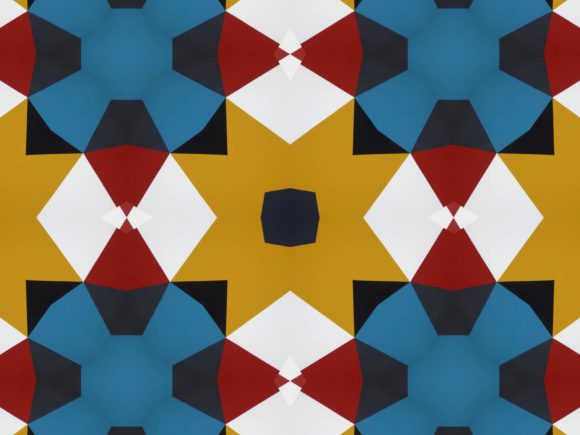
At its core, Vintage Tile Block is a curated set of retro-inspired tile motifs delivered in multiple file formats: AI, EPS, PNG, and JPG. That range of formats alone hints at its potential versatility. But the real question is not what it includes; it is whether you can deploy it with intention to improve outcomes, streamline workflows, or strengthen a brand narrative. This article examines that question from a practitioner's standpoint.
What Makes Vintage Tile Block Strategically Useful
Design assets are most valuable when they reduce friction between an idea and its execution. Vintage Tile Block does this in three specific ways. First, the retro tile aesthetic carries inherent visual storytelling weight. It evokes craftsmanship, permanence, and a sense of heritage—qualities that are difficult to manufacture from scratch. Second, the availability of both vector (AI, EPS) and raster (PNG, JPG) formats means you can move from print production to digital publishing without converting files or losing fidelity. Third, a well-structured tile block can serve as a system rather than a single image. When you use it thoughtfully, it becomes a repeatable visual language.
For entrepreneurs and marketers, this translates into faster iteration cycles. Instead of commissioning custom patterns for every campaign or product line, you adapt a consistent motif. The time saved is not trivial; it is time you can reinvest into positioning, messaging, or customer research.
Supporting Goals Beyond Aesthetics
A common mistake is to treat design resources as decorative afterthoughts. Vintage Tile Block is better understood as a tactical enabler. Consider a small business owner launching a product line with artisanal or handcrafted positioning. A retro tile pattern on packaging, labels, or social media graphics immediately communicates tradition and quality. It does so without a single word of copy. That is not decoration—it is strategic communication.
For educators and content creators, the same principle applies. A consistent tile motif used across presentation decks, handouts, or digital course materials creates a cohesive learning environment. Learners subconsciously register stability and preparation. When you align visual assets with your instructional or informational goals, you improve retention and trust.
When to Use Vintage Tile Block and When to Pause
Not every project benefits from a vintage tile aesthetic. The strategic decision to use Vintage Tile Block hinges on context. It performs best when your audience associates retro patterns with authenticity, durability, or tradition. This might include heritage brands, hospitality concepts, event invitations, lifestyle blogs, or product packaging for goods like soap, coffee, wine, or home decor. It also works well for creative professionals who need background textures for mockups, book covers, or editorial layouts.
However, there are scenarios where relying on a pre-made tile block can work against you. If your brand identity is modernist, minimalist, or technology-forward, a retro tile may send conflicting signals. Similarly, if you are operating in a crowded market where every competitor uses nostalgic design, the tile block may blend in rather than stand out. The risk is not that the asset is low quality; it is that it becomes a shortcut without strategic intent.
Planning Your Approach
Before you open the AI or EPS file, take fifteen minutes to map out what the tile block needs to accomplish. Ask yourself: What feeling or association do I want to trigger? Where will this pattern appear? Will it be a dominant visual element or a subtle background texture? Should it be repeated at scale or used as an isolated accent? These questions turn a generic resource into a targeted tool.
For example, a freelancer building a portfolio website might use Vintage Tile Block as a hero section background to signal a handmade, detail-oriented approach. A publisher designing a book cover might position the tile as a border element that frames the title. A blogger might use a single tile element as a favicon or section divider. Each use case is distinct, but the planning process is the same: clarify the outcome before applying the asset.
Operational and Productivity Benefits
One underappreciated advantage of a well-structured digital asset like Vintage Tile Block is operational consistency. When a team or solo operator works across multiple platforms—website, social media, print, email—maintaining visual coherence is a constant challenge. Having a single tile system in multiple formats means every team member pulls from the same source. The AI file is editable for custom scaling, the EPS works in professional design software, the PNG is ready for web use with transparency, and the JPG is universally viewable for quick previews or low-fidelity comps.
This reduces the likelihood of brand drift. It also cuts down on the time spent recreating patterns from scratch or searching for a usable file format when a deadline is approaching. For decision-makers and small business owners, this operational efficiency directly affects the bottom line. Less time spent on file management means more time on strategy, customer experience, or product development.
Long-Term Positioning Considerations
Sustainable brand value comes from consistency over time. Using Vintage Tile Block as part of a long-term visual system requires you to think beyond a single campaign. Consider how the tile motif can evolve. Can it be recolored for seasonal promotions? Can it be rotated, flipped, or cropped to create variations while retaining recognizability? The best strategic use treats the tile block as a foundation that can be adapted, not a static image that expires after one use.
A bakery, for instance, might adopt a retro tile pattern as a brand signature. On packaging, the tile appears in its original form. On social media, it becomes a background for text overlays. On signage, it is enlarged and used as a wallpaper effect. The motif becomes part of the customer's mental model of the brand. That kind of recognition takes months or years to build, but it starts with a deliberate choice at the asset selection stage.
Risks of Using Vintage Tile Block Without Clear Goals
The most significant risk is misalignment between the asset and the audience. If you select Vintage Tile Block simply because it looks appealing, but your target demographic skews younger and favors clean, modern design, you may inadvertently signal that your brand is outdated. This is not a flaw of the asset itself; it is a failure of contextual analysis. The same tile block that strengthens a heritage brand could weaken a tech startup's credibility.
Another risk is overuse. A tile pattern that repeats across every touchpoint without variation can feel monotonous or overwhelming. Strategic restraint matters. Use the tile block as an accent or a supporting element rather than a primary visual dominant. Allow white space and other design elements to breathe. The goal is to enhance communication, not to fill every pixel with pattern.
Finally, there is the risk of treating the file formats as interchangeable without understanding their technical constraints. The AI and EPS vectors are resolution-independent, making them suitable for large-scale print like banners or signage. The PNG is ideal for digital use with transparency, but it has a fixed resolution. The JPG is the most universally compatible but lacks transparency. Using the wrong format for the wrong medium can result in pixelation, awkward cropping, or integration issues. A quick format check before production prevents these problems.
Practical Decision-Making Guidance
When you evaluate whether Vintage Tile Block belongs in your workflow, consider three factors: audience fit, project lifespan, and your own design maturity. Audience fit asks whether the people you serve will register the tile as relevant or out of place. Project lifespan asks whether this pattern will still serve you in six months or two years. Design maturity asks whether you have the skill or support to customize the vector files if needed.
If you answer positively to at least two of these, the collection likely offers real value. If only one fits, proceed with caution and limit its use to short-term or experimental applications. The AI and EPS files give you flexibility, but only if you or a collaborator can edit them. The PNG and JPG files offer ease of use, but with less room for adaptation. Knowing your own capacity is part of the strategic equation.
Integrating Vintage Tile Block Into a Broader Workflow
Think of Vintage Tile Block not as a standalone project, but as a component in a larger system. For a marketer planning a quarterly campaign, the tile might appear in email headers, landing page backgrounds, and printed collateral. For a freelancer, it might serve as a consistent thread across a rebranding portfolio. For an educator, it might unify course materials across multiple modules.
The key is integration. Do not drop the tile block into a design and move on. Evaluate how it interacts with your typography, your color palette, and your imagery. Does it complement or compete? Does it add texture without distracting from the main message? These are not aesthetic questions alone; they are communication questions. When the visual elements work in concert, the audience receives a clearer, more persuasive message.
Over time, you may find that the tile block becomes a signature element—something your audience begins to associate with your work. That is the long-term value of a thoughtfully chosen asset. It moves from being a tool you use to being a symbol people recognize.
Vintage Tile Block offers more than convenience; it offers the possibility of visual shorthand. Whether you run a business, build content, or teach others, the strategic application of a consistent retro tile pattern can save time, strengthen identity, and improve the coherence of your output. The files themselves are just the starting point. The real value emerges when you use them with purpose, planning, and a clear understanding of the results you want to achieve.