Dandelion Seamless Pattern: A Versatile Botanical Vector Asset for Creative Projects
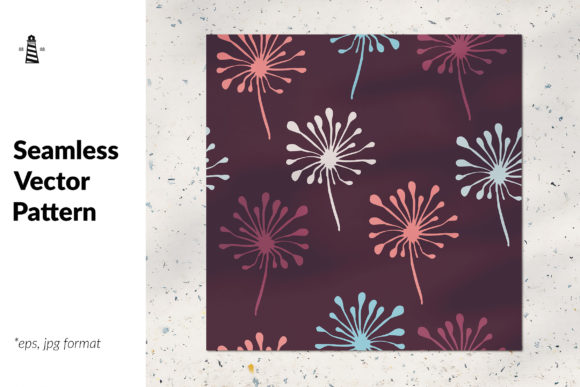
When you work with surface design, branding, or digital content creation, the quality of your foundational assets determines how smoothly your process unfolds. A dandelion seamless pattern built from hand-drawn vector art offers a distinct advantage: it combines the organic feel of botanical illustration with the technical precision required for repeatable layouts. Whether you are producing textiles, designing wallpaper, or building a cohesive web page background, the right pattern file can save hours of manual adjustment and ensure visual consistency across every application.
What a Dandelion Seamless Pattern Brings to Your Workflow
A seamless pattern is more than a decorative element. It is a structural tool that allows you to tile a design infinitely without visible seams or interruptions. When that pattern features carefully hand-drawn dandelion motifs, you gain a natural, flowing aesthetic that feels both refined and organic. The set you receive typically includes an EPS file, an Ai vector file, and a high-resolution JPG image sized at 69 x 69 inches at 300 dpi. These specifications are not arbitrary. They directly affect how you can use the pattern across different projects without losing quality or reworking the file.
The vector files let you scale the pattern up or down without degradation, which is essential when the same design needs to appear on a small greeting card and a large wallpaper panel. The high-resolution JPG serves as a ready-to-use raster version for quick mockups or digital previews. Having both vector and raster formats means you can move between design software, print production, and web platforms without conversion headaches.
Before You Start: Preparation and Asset Selection
Every project begins with asset selection. Choosing a dandelion seamless pattern early in your planning phase gives you a clear visual anchor. Instead of building a color palette or typography scheme in isolation, you can pull cues directly from the botanical elements. The fine lines and delicate seed heads of dandelions work well with both minimalist and layered compositions, so the pattern can inform your broader design direction rather than being an afterthought.
If you are working on a brand identity or a product line, reviewing the pattern file before sketching your layout helps you anticipate how the repeat will function at different scales. Open the Ai file, inspect the vector paths, and test how the tiles align. This upfront check prevents misalignment issues later when you move to production.
During Production: Integration with Other Tools and Platforms
Once your project is underway, the pattern interacts with your existing toolset in practical ways. The EPS and Ai formats are compatible with Adobe Illustrator, Affinity Designer, CorelDRAW, and most vector editing applications. If your workflow relies on precise color adjustments, you can modify individual elements within the pattern without disrupting the seamless tiling. For example, you might shift the dandelion puffs from white to a warm cream tone to match a specific textile palette, or adjust the background transparency for a digital application.
The large JPG image is useful for rapid prototyping. Drop it into a mockup template for a gift paper design or a web page background preview, and you can instantly evaluate how the pattern reads at full scale. Because the resolution is 300 dpi at 69 inches, the raster file holds up well for large-format printing without needing to upsample.
For web designers, the vector files allow you to export smaller tiles optimized for CSS backgrounds or responsive layouts. You can generate a lightweight PNG or SVG tile from the Ai file and maintain crisp edges on retina displays. This workflow keeps your load times low while preserving the hand-drawn quality that distinguishes the pattern from generic digital repeats.
After Completion: Quality Control and Long-Term Use
After you have integrated the pattern into your final product, quality control matters. The high-resolution JPG lets you print a full-size proof if needed, but the vector files give you the ability to inspect every curve and junction. Zoom into the seamless edges and verify that the repeat is mathematically clean. A well-constructed dandelion pattern should show no visible tile boundaries, even when viewed closely.
For long-term use, store the EPS and Ai files in your asset library with clear naming conventions. Because the pattern is hand drawn rather than procedurally generated, it retains a unique character that sets your work apart. You can reuse the pattern across multiple product lines—textiles, wallpapers, stationery—by simply adjusting scale or color variants in the vector file. This reusability makes the initial investment in a quality pattern cost effective over time.
Textile and Fashion Production
In textile design, repeat accuracy is nonnegotiable. A dandelion seamless pattern with hand-drawn details translates well onto fabric because the organic linework hides minor registration shifts that can occur during printing. Use the Ai file to create colorways that match your collection’s palette, then export production-ready files at the required dimensions. The 69 x 69 inch size is large enough to accommodate many standard fabric repeat units without stretching or distortion.
Wallpaper and Interior Design
For wallpaper, the pattern’s scale flexibility matters. A dandelion motif that looks delicate on a phone case can become a bold feature wall when scaled up. Because the vector paths are clean, you can enlarge the pattern significantly without introducing pixelation or jagged edges. Test the pattern at different percentages in your layout software, and keep the EPS as your master file for scaling adjustments.
Digital and Print Collateral
Greeting cards, gift wraps, and invitation suites benefit from botanical patterns that feel handcrafted. The JPG version is ready for print-on-demand platforms, while the vector files allow you to isolate elements for spot gloss, foil stamping, or embossing. If you produce digital invitations, export a tile from the Ai file and use it as a repeating background in your email design tool or PDF layout.
Web Page Backgrounds and Social Media Assets
Web designers can use the pattern as a subtle background texture or a hero section accent. Export a small SVG tile from the vector file to keep file sizes minimal. The hand-drawn quality gives the site a bespoke feel without relying on stock photography. For social media graphics, place the pattern behind text or product images to create a cohesive branded look across posts.
Implementation Tips for a Smooth Workflow
- Test the scale early. Open the Ai file and duplicate the pattern tile across a large artboard. Verify that the repeat aligns perfectly at the dimensions you intend to use. Make any adjustments before you begin layout work.
- Create color variants in the vector file. Because the pattern is fully editable, you can duplicate the artboard and experiment with different color schemes without altering the original. This approach keeps your master file intact while giving you multiple production-ready options.
- Use the JPG for client previews. Send the raster image to clients or stakeholders for quick approval. It loads fast and displays accurately at full resolution. Save the vector files for final production handoff.
- Organize your asset library. Name the files clearly with the pattern name, format, and date. If you purchase multiple botanical patterns, tag them by plant type, color family, and intended use case. This habit saves time when you search for assets later.
- Check print compatibility. Before sending to a printer, confirm that your output device supports the pattern’s color space. Convert to CMYK if needed from the Ai file, and verify that thin lines in the hand-drawn elements reproduce correctly on the intended substrate.
Compatibility with Your Existing Tools
The pattern files are designed for standard vector and raster workflows. If you use Adobe Creative Cloud, Affinity, or CorelDRAW, the EPS and Ai formats will open natively. For users working primarily in web design tools like Figma or Sketch, you can export SVG tiles from the vector file. The JPG is universally compatible. If your team uses different software, the formats ensure that everyone can access the pattern without conversion issues.
Organization and Efficiency
Storing the pattern in a well-structured asset library reduces friction during future projects. Consider creating a master folder for botanical patterns, with subfolders for vector sources, raster previews, and exported tiles. When you reuse the dandelion pattern across multiple products, you only need to retrieve the original Ai file and adjust the scale or color. This efficiency matters when you manage tight deadlines or large production runs.
Consistency Across Deliverables
A single dandelion seamless pattern can unify a product line that spans textiles, paper goods, and digital media. The key is to maintain consistent color treatment and scale across all outputs. Use the vector file as your single source of truth, and document the exact CMYK or hex values you apply. When you return to the project months later, that reference ensures the pattern matches the original intent.
Long-Term Value of Hand-Drawn Vector Patterns
A hand-drawn pattern carries subtle variations in line weight and texture that procedurally generated patterns often lack. These nuances give your work a human quality that resonates with customers and audiences. Because the pattern is vector based, it remains editable and scalable indefinitely. Unlike a raster image that degrades over time or requires re-scanning, a well-maintained vector file stays production ready for years.
Investing in a detailed, hand-drawn dandelion seamless pattern also means you own a unique asset. The same pattern will not appear in competitor products or stock libraries. For entrepreneurs and small business owners building a brand identity, this exclusivity reinforces credibility and distinctiveness. The pattern becomes part of your visual language, not just a filler element.
Adapting the Pattern to Different Project Stages
Whether you are in the research phase, active production, or final review, the pattern adapts to your current need. In the early stages, use it to generate mood boards and color studies. During production, keep the vector file open as a live reference for spacing and alignment. In the review stage, output test prints from the JPG to evaluate how the pattern reads at full scale. Each phase benefits from having both a flexible vector source and a reliable raster preview.
If your project involves multiple contributors, share the Ai file with clear layer names and locked guidelines. This practice prevents accidental edits to the seamless repeat while allowing team members to adjust colors or add overlays. The pattern becomes a collaborative asset rather than a static element.
Final Observations on Practical Integration
A dandelion seamless pattern is not merely a decorative download. It is a production-ready asset that supports real workflows across print, digital, and textile applications. The combination of EPS, Ai, and high-resolution JPG formats ensures that you can move from concept to finished product without unnecessary steps. The hand-drawn quality sets your work apart, while the technical specifications keep the process efficient.
When you choose a pattern that has been carefully constructed with clean vector paths and thoughtful tiling, you eliminate guesswork. You can focus on composition, color, and application rather than fixing misaligned repeats or low-resolution outputs. For creative professionals, entrepreneurs, and marketers who value both aesthetic quality and practical reliability, a well-made botanical seamless pattern earns its place in the asset library.