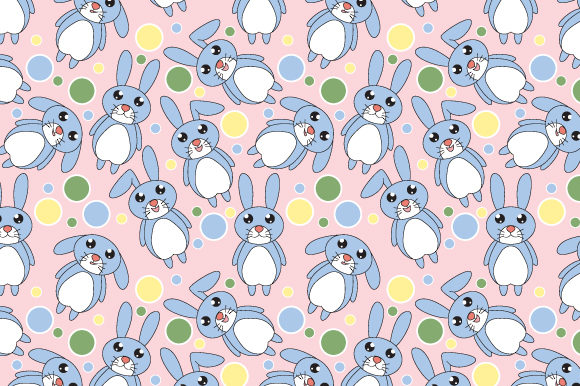
Cute Rabbit Seamless Pattern: A Practical Guide to Design, Applications, and File Formats
Design projects often demand a cohesive, repeatable element that adds personality without overwhelming the overall composition. A cute rabbit seamless pattern offers exactly that: a versatile, charming visual that can be tiled infinitely across surfaces, fabrics, and digital canvases. Whether you are creating product packaging, designing a nursery mural, or building a brand identity around warmth and approachability, this type of pattern provides a ready-made solution that saves time and ensures visual consistency.
Understanding what a seamless pattern is, how the file formats work, and how to apply it in real-world projects can help you make informed decisions. Below, we explore the practical side of using a cute rabbit seamless pattern, the common challenges it addresses, and how different users can get the most out of the included SVG 1.1, Ai 10, and EPS files.
What Makes a Cute Rabbit Seamless Pattern Useful?
A seamless pattern is a design that repeats without visible seams or interruptions, creating an endless, flowing texture. When the motif is a cute rabbit, the result is a playful yet sophisticated element that appeals to a wide audience—from children’s products to boutique stationery. The key benefit is efficiency: instead of designing each tile from scratch, you have a ready-to-use pattern that works across multiple mediums.
The pattern becomes a foundation for branding, décor, or digital assets. For instance, a small business selling handmade baby gifts can use the same rabbit pattern on wrapping paper, tags, and fabric labels, ensuring a unified look. Similarly, a children’s book illustrator might use the pattern as a background for a storyboard, adding visual interest without distracting from the main illustrations.
Common Challenges Addressed by a Seamless Rabbit Pattern
Many creators face obstacles when trying to produce repeatable designs on their own. Here are the most frequent pain points and how a cute rabbit seamless pattern resolves them:
- Time constraints: Designing a seamless tile manually requires careful alignment, color matching, and testing. A pre-made pattern eliminates this labor.
- Technical file issues: Not all image formats support true seamless tiling. SVG, AI, and EPS files are vector-based, meaning they scale infinitely without quality loss—ideal for both small tags and large banners.
- Inconsistent branding: Using different designs for different products can dilute brand identity. One cohesive pattern ties everything together.
- Printing limitations: Low-resolution patterns look pixelated when enlarged. Vector formats ensure crisp results on any surface, from fabric to foam board.
- Creative block: Even experienced designers sometimes need a starting point. A cute rabbit pattern can spark new ideas for colorways, layouts, or product lines.
Graphic Designers and Illustrators
For professionals, a cute rabbit seamless pattern serves as a versatile asset that can be customized in vector editing software. Because the ZIP file includes SVG 1.1, Ai 10, and EPS formats, you can open the pattern in Adobe Illustrator, Affinity Designer, Inkscape, or CorelDRAW and immediately modify colors, scale, or rotation. You might use the pattern as a background for social media graphics, as a repeat element in a brochure, or as a texture for a digital painting.
A practical approach: import the AI file, change the rabbit’s color to match a client’s brand palette, and adjust the tile size to fit a specific print dimension. The pattern becomes a custom tool rather than a static image.
Small Business Owners and E-Commerce Sellers
If you sell physical products, consistency across packaging, labels, and marketing materials builds customer trust. A cute rabbit seamless pattern can appear on gift boxes, tissue paper, product hang tags, and even your website’s background. Using the same pattern creates a cohesive brand experience that feels intentional and polished.
Practical tip: Use the EPS or SVG file to create a wrapper for a candle or soap product. The repeat nature of the pattern means you can cover any size label without worrying about ugly seams. For digital use, export a PNG from the vector file and place it behind product photos on your site.
Hobbyists and DIY Creators
For personal projects, a cute rabbit seamless pattern adds a professional touch without requiring advanced design skills. You might print the pattern on iron-on transfer paper for a custom t-shirt, use it as a scrapbooking background, or create matching party decorations for a baby shower. The vector formats ensure that even at large sizes—like a banner or poster—the rabbits remain sharp and clear.
One idea: open the SVG file in a free browser-based editor like Vectr or Gravit Designer, adjust the layout to your liking, then export a high-resolution PNG for printing at home or through a service.
Practical Applications Across Industries
The versatility of a cute rabbit seamless pattern extends beyond typical crafting. Here are several real-world applications organized by need:
Textile and Fashion Design
Fabric printing requires a repeat pattern that aligns perfectly across yardage. The SVG and EPS formats allow fabric designers to create swatches at any scale, test color variations, and output files that printing services accept. A pattern featuring cute rabbits works well for children’s apparel, quilting fabric, or even accessories like scarves and bags.
Digital Backgrounds and Web Design
For websites, social media templates, or digital invitations, a seamless pattern serves as a subtle background that adds character without slowing load times. Because vector files are lightweight and resolution-independent, you can create responsive designs that look good on any screen. A soft, pastel rabbit pattern might be used as a hero section background for a children’s e-commerce site, for example.
Packaging and Product Design
Product packaging benefits from patterns that wrap around boxes, tubes, or pouches. The seamless nature ensures that the design continues uninterrupted around corners. A cosmetic brand targeting young families might use the rabbit pattern on lotion bottles or diaper cream tubes, reinforcing a gentle, playful identity.
Stationery and Paper Goods
Greeting cards, notebooks, wrapping paper, and stickers all gain a cohesive look when built around a single pattern. The AI and EPS formats allow you to isolate individual rabbit motifs if needed—for example, placing a single rabbit on a card front while using the full pattern on the envelope liner.
Interior Decoration and Wall Art
For home décor, a cute rabbit seamless pattern can be printed on wallpaper, fabric for throw pillows, or canvas wall art. Because the vector files scale infinitely, you can create a feature wall mural at any size without pixelation. This is especially useful for nurseries, playrooms, or cafes with a whimsical theme.
Getting the Most Out of the ZIP File Contents
The ZIP package includes three industry-standard formats: SVG 1.1, Ai 10, and EPS. Each serves a different purpose:
- SVG 1.1 is ideal for web use and digital publishing. It works natively in browsers and can be edited with code or design tools. Use this for website backgrounds, digital invitations, or any screen-based project.
- Ai 10 is compatible with Adobe Illustrator CS and later versions. This format preserves all layers and editable components, making it the best choice for extensive customization.
- EPS is a universal vector format that opens in nearly every design application, including older software. It’s reliable for printing and exchange between different programs.
When you unzip the files, you can treat each format as a starting point. For example, use the SVG for quick web exports, the AI file for detailed editing, and the EPS for sending to a print shop that requests a specific format.
Considerations for Scaling and Print Output
Vector patterns eliminate resolution concerns, but you still need to consider the repeat size. A large repeat (e.g., rabbits spaced far apart) works well for big surfaces like wallpaper, while a small repeat creates a finer texture suitable for fabric or packaging. Most vector editors let you adjust the tile dimensions by scaling the pattern group or adjusting the artboard size.
For print, always confirm with your printer the required format and DPI. While vectors are resolution-independent, some print services request a high-resolution raster preview (TIFF or PNG) embedded in the file. You can generate this from the vector source easily.
Examples of Outcome-Based Use Cases
Consider a children’s clothing brand that wants a signature pattern for its spring collection. The designer opens the AI file, recolors the rabbits in pink and mint green, resizes the repeat to a 6-inch tile, and places it on a dress pattern. The result is a unique garment that stands out but maintains a professional finish.
Another example: a wedding invitation designer wants a playful element for a rustic-themed couples’ shower. She uses the SVG file to create a subtle watercolor-style background (by applying a blur effect in the design software) and prints the invitations on textured cardstock. The seamless repeat ensures that no matter how many invitations are printed, the pattern aligns perfectly across the stack.
A third scenario involves a teacher creating classroom materials. Using the EPS file, she prints the pattern on sticker paper and cuts out individual rabbits for name tags or reward charts. Because the pattern is seamless, she can cut out as many stickers as needed without wasting material.
Final Practical Recommendations
To get the best results from your cute rabbit seamless pattern, consider these actions:
- Test the pattern at different scales before finalizing. A pattern that looks charming on a screen may feel too busy or too sparse when printed large.
- Always keep a backup of the original ZIP contents. Vector files can be modified accidentally, so having the originals allows you to start fresh.
- If you are not a designer, start with the SVG format. It is the most forgiving and works in many free tools without needing a subscription.
- Use the pattern as a secondary element rather than the main focal point in most cases. Seamless patterns shine as background textures or accents that support the primary design.
- Experiment with color variations. A single pattern can yield multiple looks by changing hues to match seasons, campaigns, or client preferences.
A cute rabbit seamless pattern is more than a decorative element—it is a practical tool that solves real design problems. By understanding the file formats, adapting the pattern to your specific project, and focusing on the outcome you want, you can create cohesive, professional results without starting from zero. Whether you are launching a product line, decorating a space, or simply adding a playful touch to your work, the right pattern in the right format makes all the difference.