Vintage Golfer with Golf Club: A Strategic Asset for Creative Projects and Brand Positioning
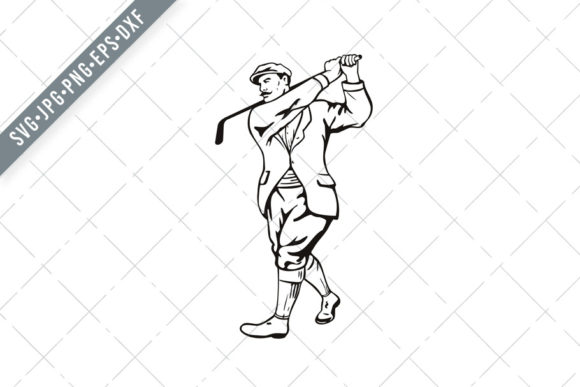
When you work across multiple creative or commercial projects, finding visual assets that offer both character and utility can be surprisingly difficult. The Vintage Golfer with Golf Club illustration fills that gap in a way few modern stock graphics can. It is not a generic silhouette or a hyper-realistic render. It is a deliberately styled, black-and-white retro depiction of a golfer in a newsboy cap, viewed from the front, poised to tee off. At first glance, it may seem like a niche design element. Look closer, and you will find a versatile tool that supports branding, product development, customer communication, and even operational efficiency for small businesses, creators, and publishers.
This article walks through what this vintage golfer asset actually offers, why thoughtful use matters, and how to integrate it into your workflow with clear intention rather than random decoration. Whether you are designing a birthday invitation, building a pattern for scrapbooking, or positioning a golf-related brand, understanding the strategic value of this resource will help you make better decisions and achieve stronger results.
What the Vintage Golfer with Golf Club Illustration Actually Includes
Before discussing strategy, it is useful to understand what you are working with. This set provides multiple file formats so you can use the same illustration across different tools and platforms without rework. You receive an SVG vector file, a PNG at 300 dpi sized at least 10 inches, a DXF file, an EPS file, and a JPG. That range covers everything from precision cutting with a Silhouette Cameo or Cricut to high-resolution printing for wall art, greeting cards, or apparel.
The illustration itself is clean, retro, and monochrome. The golfer wears a cheese cutter hat or newsboy cap, stands facing forward, and is shown in the middle of a golf swing or tee-off. The isolated background means you can drop this asset into any layout, combine it with text, layer it with patterns, or resize it without losing quality. For anyone who creates physical products, digital designs, or marketing collateral, this kind of versatility is not just convenient. It saves time, reduces production friction, and keeps your visual identity consistent.
Why Thoughtful Use of a Vintage Design Asset Supports Branding and Positioning
Using a retro illustration is not automatically strategic. The value comes from aligning the visual tone with your brand's personality, your audience's expectations, and the context in which the asset will appear. The Vintage Golfer with Golf Club carries a specific aesthetic. It evokes classic golf culture, mid-century design, and a sense of timeless leisure. That tone can support positioning for businesses, blogs, or events that want to communicate tradition, craftsmanship, or relaxed sophistication.
For example, a golf-themed apparel brand targeting adults who appreciate vintage style could use this illustration on T-shirts, tote bags, or hat patches. A wedding planner designing a golf-course reception might incorporate the asset into invitations, table numbers, or thank-you cards. A blogger writing about golf history or classic sportswear could use the graphic as a header image or social media thumbnail. In each case, the illustration reinforces the message without requiring additional explanation. It signals a specific mood and era instantly.
The key is intentional placement. If your brand leans modern, minimalist, or high-tech, this vintage asset may clash. But if your positioning benefits from nostalgia, authenticity, or a hand-drawn feel, this asset becomes a strategic shorthand for those values.
Practical Applications Across Product Lines and Customer Touchpoints
Because the set includes SVG, PNG, DXF, EPS, and JPG formats, you are not limited to one type of output. This opens up multiple use cases that can support everything from product development to customer experience. Below are several realistic scenarios where the Vintage Golfer with Golf Club can serve a clear purpose.
Physical Products and Merchandise
If you sell physical goods on platforms like Etsy, Shopify, or Amazon Handmade, having a ready-to-use vector file reduces the time between concept and production. You can upload the SVG directly to a print-on-demand provider for T-shirts, mugs, or tote bags. The PNG at 300 dpi and 10 inches or larger is suitable for direct-to-garment printing or sublimation. For laser cutting or vinyl stencils, the DXF and EPS files give you clean paths that cut accurately. A small business owner could create a limited run of vintage golf-themed coasters, wall art, or notebook covers using the same illustration, keeping production costs low and visual consistency high.
Event Planning and Party Supplies
Birthday parties, retirement celebrations, or golf tournament events often require cohesive decorations. The black-and-white retro style works well for invitations, banners, cupcake toppers, and favor tags. Because the background is isolated, you can place the golfer against any color scheme or pattern. For scrapbooking or memory books, the illustration adds a thematic anchor without overwhelming other design elements.
Digital Content and Social Media
Bloggers, publishers, and content creators can use the JPG or PNG as featured images, email headers, or social media posts. The vintage style stands out in feeds dominated by bright, glossy photography. A golf lifestyle blog could use the illustration as a recurring visual signature for a column or series. A course review site might include it as a subtle background element to reinforce the sport's heritage. The key is using it sparingly and with purpose, so it becomes a recognizable part of your content identity rather than random clip art.
Planning Your Approach: When to Use This Asset and When to Skip It
Strategic use of any design asset requires asking yourself what goal the illustration serves. If you cannot articulate why this specific vintage golfer belongs in your project, you risk diluting your message or confusing your audience. Here are some planning questions to consider before you download and place the graphic.
- Does the vintage aesthetic align with your brand voice? If your brand is modern, clean, and tech-forward, a retro illustration may feel out of place. If your tone is nostalgic, artisanal, or classic, this asset will feel natural.
- What action do you want the viewer to take? If the goal is to sell a product, the illustration should support the product's story, not distract from it. If the goal is to create atmosphere, the asset can take a more prominent role.
- Who is your audience, and what do they value? Adults aged 20–50 who appreciate golf, vintage design, or handmade goods are likely to respond positively. A younger audience unfamiliar with retro aesthetics may not connect as strongly.
- Are you using it once or as part of a system? Using the same illustration across multiple products or communications creates recognition. Using it randomly can feel inconsistent. Decide whether this asset becomes a recurring element or a one-off accent.
These questions may seem basic, but skipping them is one of the most common reasons design assets fail to deliver value. Without a clear goal, even a high-quality SVG file becomes decoration rather than communication.
Risks of Using the Vintage Golfer Without Clear Goals or Context
Every design decision carries trade-offs. Relying on this vintage golfer illustration without considering its impact can create several problems. First, if the asset appears in contexts where the retro style contradicts your brand's positioning, it can confuse your audience. A golf instructional app with a sleek, modern interface would likely benefit from clean line icons rather than a vintage drawing. Forcing the asset into that environment would reduce credibility.
Second, using the same illustration across too many products without variation can make your offerings feel repetitive or uninspired. If you sell ten different items all featuring the exact same graphic, buyers may perceive a lack of originality. The solution is to treat the asset as a base element that you combine with other visuals, typography, and layouts to create distinct products.
Third, ignoring file format specifications can lead to production issues. For example, using a low-resolution JPG for a large banner results in pixelation. Using an SVG designed for cutting as a print file may cause unexpected lines. Always match the format to the intended use. The set provides multiple options, so take the time to select the right one for your output method.
Long-Term Value: Building a Library of Intentional Visual Assets
One of the most overlooked aspects of creative work is how individual assets accumulate over time. The Vintage Golfer with Golf Club illustration is not just a one-off download. It can become part of a broader library of retro sports graphics that you use consistently across seasons, campaigns, or product lines. Building that library intentionally, rather than collecting random files, supports long-term branding and operational efficiency.
For instance, if you run a small print-on-demand shop focused on golf apparel, having a set of vintage golf illustrations in matching styles allows you to release new designs quickly without starting from scratch each time. You can mix and match elements, change backgrounds, or combine the golfer with text overlays. Over months and years, that library becomes a competitive advantage. You produce faster, your visual identity remains coherent, and your customers begin to recognize your style.
Similarly, if you are a content creator covering golf travel, history, or gear, consistent use of a vintage aesthetic across thumbnails, headers, and social graphics builds a recognizable brand. Your audience starts associating that look with your content. That recognition translates into higher engagement, more shares, and a stronger connection with your niche.
Practical Considerations Before You Start Your Project
To get the most out of this asset, take a few practical steps before you open your design software. First, confirm that your software supports the file formats you plan to use. SVG works well in Adobe Illustrator, Inkscape, Cricut Design Space, and Silhouette Studio. EPS is standard for professional design applications. DXF is common for CAD and cutting machines. PNG and JPG are universal but check resolution requirements for your printer or platform.
Second, decide whether you need to modify the illustration. The clean black-and-white style makes it easy to recolor, resize, or combine with other elements. If your brand uses a specific color palette, you can adjust the graphic accordingly. If you need a mirrored version or a different crop, the vector file gives you that flexibility without losing quality.
Third, consider the scale of your project. A 10-inch PNG at 300 dpi is sufficient for most small to medium prints, but large banners or posters may require scaling up the SVG. Vector files are resolution-independent, so they are your safest choice for any layout where size is uncertain.
Decision-Making Guidance for Entrepreneurs, Creators, and Small Business Owners
If you are evaluating whether this Vintage Golfer with Golf Club set belongs in your workflow, start by listing three concrete projects you would use it for. Be specific. Not "maybe some T-shirts," but "a limited run of 50 vintage golf T-shirts for a Father's Day promotion." Not "social media posts," but "a series of three Instagram posts celebrating classic golf courses." When you define the project, the value of the asset becomes measurable. You can weigh the cost of the download against the revenue, engagement, or brand lift you expect.
If you cannot name three specific projects with clear timelines and goals, hold off on purchasing until you can. This is not about being overly cautious. It is about treating design assets as tools rather than impulse buys. A tool is only useful when applied to a task. The same logic applies here.
For those who already have a clear use case, the set offers a reliable, high-quality starting point. The multiple file formats reduce technical hurdles. The retro style differentiates your work from generic stock imagery. And the isolated vector gives you creative control without requiring advanced design skills.
Final Observations on Using the Vintage Golfer with Golf Club Intentionally
Good design decisions come from understanding what a piece of content can do and what it should not do. The Vintage Golfer with Golf Club illustration can strengthen a brand, streamline production, and create emotional resonance with an audience that values tradition, craftsmanship, and retro style. It can also be misused when applied without context, goal alignment, or format awareness. The difference between success and waste is almost entirely a matter of planning.
Approach this asset as you would any strategic tool. Define the outcome you want before you place the graphic. Choose the right format for your output method. Use it consistently where it fits, and leave it out where it does not. Over time, that discipline will yield better results than any single illustration can deliver on its own. The vintage golfer is not a shortcut to good design. It is a resource that rewards thoughtful use.